Our Blog

What’s the advantage to Invisalign®?

July 18th, 2018

Invisalign, which we happily provide at Pack Orthodontics, is a great alternative to traditional orthodontic treatment if you've been apprehensive about the thought of metal braces. During your initial visit, the first thing we do is take an impression of your teeth as they are now and digitize it. Using special software, we look at the current positioning of your teeth and compare it to the way your teeth should look.

Invisalign treatment, which consists of a series of aligners that you switch out approximately every couple of weeks, can help patients with crowded teeth, crossbites, overbites, underbites and more. Invisalign gradually shifts your teeth into place, creating the dazzling smile you’ve always wanted. During treatment with Dr. Pack, patients wear the aligners all day and night, except for during meals and when they’re brushing and flossing; cleaning your teeth and eating are a snap since you can easily remove your aligners! And because they’re clear, no one will know that your teeth are steadily straightening!

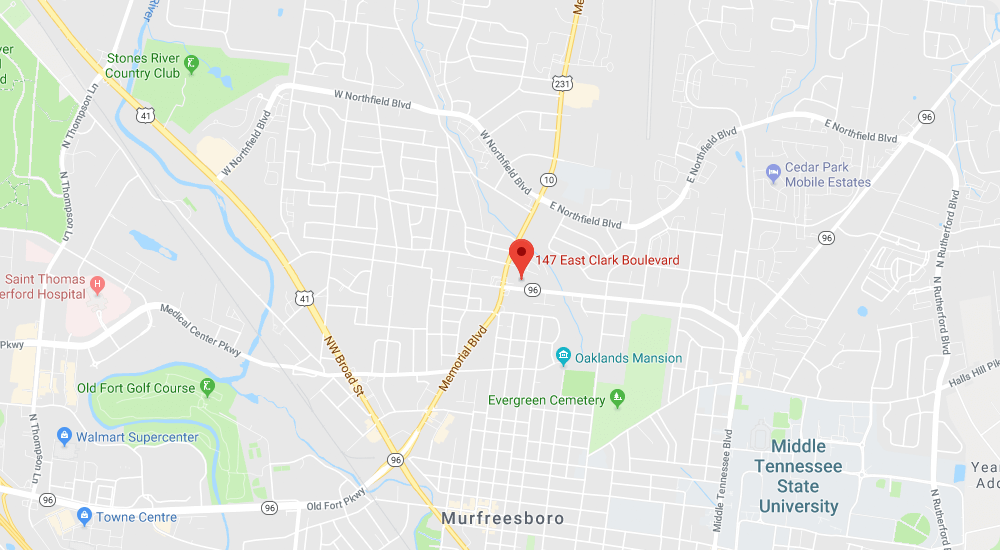
To find out if you are the right candidate for Invisalign treatment, we invite you to give us a call at our convenient Murfreesboro, TN office and schedule a consultation.

Keep that candy at bay during your treatment!

July 11th, 2018

Now that you have braces, it is more important than ever to maintain good oral hygiene during your treatment, as Dr. Pack will tell you. While we trust you will continue brushing and flossing on a regular basis throughout your treatment at Pack Orthodontics, you also have to mindful of what you eat. While all those sweet, sour, and sticky candies may taste great, these treats can actually damage your teeth and braces!

Sour candies  can be acidic to your teeth, and actually wear down the enamel that protects them, resulting in tooth decay and cavities. If you do indulge in eating these candies at some point during your treatment, be sure to wash your mouth out with water, drink milk or eat a few slices of cheese. These foods will help neutralize the acid in your mouth.

Besides cavities and tooth decay, many people do not realize that good oral health and hygiene are important to your overall health, too; researchers have discovered the connection between periodontal disease and other major health concerns, such as heart disease. Therefore, it is important to maintain a good oral hygiene routine just as you did before your braces. This includes visiting your dentist here in Murfreesboro, TN every six months, brushing and flossing daily, and using an antibacterial mouthwash, as well as visiting Dr. Pack for your regular adjustment appointments.

For more questions about foods you should avoid while wearing braces, or if you have any general questions about your treatment, we encourage you to give us a call, ask us at your next adjustment appointment or ask us on Facebook!

Happy Fourth of July

July 4th, 2018

Every year, Americans all over the world celebrate the birth of the country and its independence on the Fourth of July. There are countless ways that people celebrate and they range from community parades and large scale gatherings to concerts, fireworks displays, and smaller scale celebrations among family and friends. For some people, July 4th is synonymous with baseball, while for others it is all about the beach of barbecues. However you celebrate, you can be sure that red, white, and blue is visible everywhere throughout the area.

The Beginnings of Fourth of July Celebrations

Although it wasn't officially designated as a federal holiday until 1941, the actual tradition of celebrating Independence Day goes back to the time of the American Revolution (1775 – 1783). At the time of the American Revolution, representatives from the 13 colonies penned the resolution that ultimately declared their independence from Great Britain. The continental congress voted to adopt the Declaration of Independence on July 2nd of 1776. Two days later, Thomas Jefferson's famous document that is now known as the Declaration of Independence, was adopted by delegates representing the 13 colonies.

First States to Recognize the Fourth of July

In 1781, Massachusetts became the first state (or commonwealth) whose legislature resolved to designate July 4th as the date on which to celebrate the country's independence. Two years later, Boston became the first city to make an official designation to honor the country's birth with a holiday on July 4th. In that same year, North Carolina's governor, Alexander Martin, became the first governor to issue an official state order stipulating that July 4th was the day on which North Carolinians would celebrate the country's independence.

Fun Facts About the Fourth of July

  • The reason the stars on the original flag were arranged in a circle is because it was believed that would indicate that all of the colonies were equal.
  • Americans eat over 150 million hot dogs on July 4th.
  • Imports of fireworks each year totals over $211 million.
  • The first “official” Fourth of July party took place at the White House in 1801.
  • Benjamin Franklin didn't want the national bird to be the bald eagle. He believed that the turkey was better suited to the coveted distinction. John Adams and Thomas Jefferson disagreed with him, and he was outvoted, so the bald eagle became the official bird of the United States.

For many, the tradition is something entirely different. Along the coastal areas of the United States, people may haul out huge pots to have lobster or other types of seafood boils. Others may spend the day in the bleachers at a baseball game, or at a park, cooking a great traditional meal over an open fire. No matter how or where you celebrate, one thing is certain: all Americans celebrate July 4th as the birth and independence of our country.

Dr. Pack and our team at Pack Orthodontics wish you a safe and happy Fourth of July!

What is malocclusion?

June 27th, 2018

The term malocclusion refers to misalignment of teeth. You may have been born with malocclusion, so your teeth simply grew in crooked, or the misalignment and crowding of your teeth occurred over a period of time. Either way, not only can malocclusion pose cosmetic issues, but it can have a negative effect on your speaking and eating abilities as well.

Types of Malocclusion

Malocclusion encompasses multiple types and classifications of misalignment issues, including twisting or rotation of the teeth and molars that do not meet when you bite down. In some cases, the top front teeth are pushed outward in an upper protrusion.

In other cases, a misplaced midline results when the front top teeth don’t meet with the front bottom teeth. Transposition occurs when teeth protrude through the gums in a position where another tooth is supposed to be.

Practically any type of crowding or spacing issues, rotation or twisting of the teeth, or bite problem – including overbite, underbite, open bite, or crossbite – is included under the umbrella of malocclusion.

Malocclusion Classifications

There are three classifications of bite or misalignment problem.

  • Class 1 malocclusion: While the bite may be normal, the upper teeth overlap the lower teeth slightly. This is the most common type.
  • Class 2 malocclusion: Known as overbite or retrognathism, class 2 involves a severe overlap of the upper teeth and jaw over the bottom teeth and jaw.
  • Class 3 malocclusion: Known as underbite or prognathism, class 3 occurs when the lower teeth and jaw overlap the upper teeth and jaw. Thus, the lower jaw juts forward.

Causes of Malocclusion

The most common cause of malocclusion is genetics. However, there may be other causes, including the development of abnormally-shaped teeth, lost teeth, or impacted teeth; thumb sucking or overuse of a pacifier as a small child; having fillings or crowns that do not fit correctly; a serious injury that causes misalignment of the jaw; or developing a tumor of the mouth or jaw.

Treating Malocclusion

Orthodontic care at Pack Orthodontics with Dr. Pack is the main treatment available for malocclusion, which includes getting braces, Invisalign, or other corrective treatments. Treatment is ideal not just to have your smile improved, but because it makes the teeth easier to clean and maintain, lowers the risk of gum disease and tooth decay, and can even take pressure off the jaw and teeth.

Think about orthodontic treatment if you (or your child) display any signs of malocclusion. Early treatment of malocclusion during childhood can lessen expensive treatment later on.